So what does a music producer do all day? Part arranger, part referee, part therapist. Here is what the job really involves, and what hiring one costs.
Ask ten producers what they do and you will get ten answers, most of them starting with 'it depends'.
That is not them being cagey. The job genuinely changes shape from record to record. On one album the producer writes half the chord changes and plays the keyboard part. On the next, they mostly keep the band talking to each other and make sure somebody actually pressed record. So what does a music producer do, in plain terms? Here is the version nobody puts on a business card.
The one-sentence version
A producer is the person responsible for how the finished record turns out. Not the engineer who captures the sound, not the player who makes it. The one who decides what the song needs, and who carries it if the decision was wrong.
Film directors get handed roughly the same brief, and the comparison holds. Somebody has to keep the whole thing in their head while everyone else is buried in their own part.
What does a music producer do in an actual session
Strip away the mythology and a session day looks like this.
- •Decides what gets recorded and in what order, because studio hours cost money and morale.
- •Runs the arrangement calls: cut the second chorus, lose eight bars of intro, try it a semitone down.
- •Picks takes. The most underrated part of the job, and the thing bands are worst at judging about themselves.
- •Manages the room. Tells the singer that was the one when it was, and finds a kinder route to the truth when it was not.
- •Keeps the schedule honest, so the last two songs are not tracked in a panic on the final afternoon.
Some of that is craft. A surprising amount of it is people. A band is four to six humans with feelings and a deadline, and someone has to be the adult holding the stopwatch.
The producer types you will meet
Rough categories, and most working producers slide between them.
- •The auteur. Brings a sound. You hire them because you want their record as much as yours. Expect strong opinions and a strong invoice.
- •The collaborator. Writes in the room with you and pushes songs further than the band would alone. The most common shape in rock and indie.
- •The engineer-producer. Runs the desk and produces at the same time. Cheaper, faster, and extremely common at the level most bands actually start at.
- •The beatmaker-producer. In hip hop and electronic music, producer usually means the person who made the track. Different job, same word.
The term is doing far too much work in the language, which is exactly why the question keeps getting asked.
What a producer actually changes
Three things, in this order of importance: the song, the performance, the sound.
Song first. A producer who moves your chorus forty seconds earlier has done more for the record than any microphone decision ever will. That kind of arrangement surgery compounds, which we dig into in how songs become hits.
Performance second. Good producers get better takes out of people than those people can get out of themselves, usually by managing pressure rather than adding to it.
Sound third. It matters, but it is the last thing to panic about. A gorgeous recording of a boring arrangement is still boring.
What producers cost
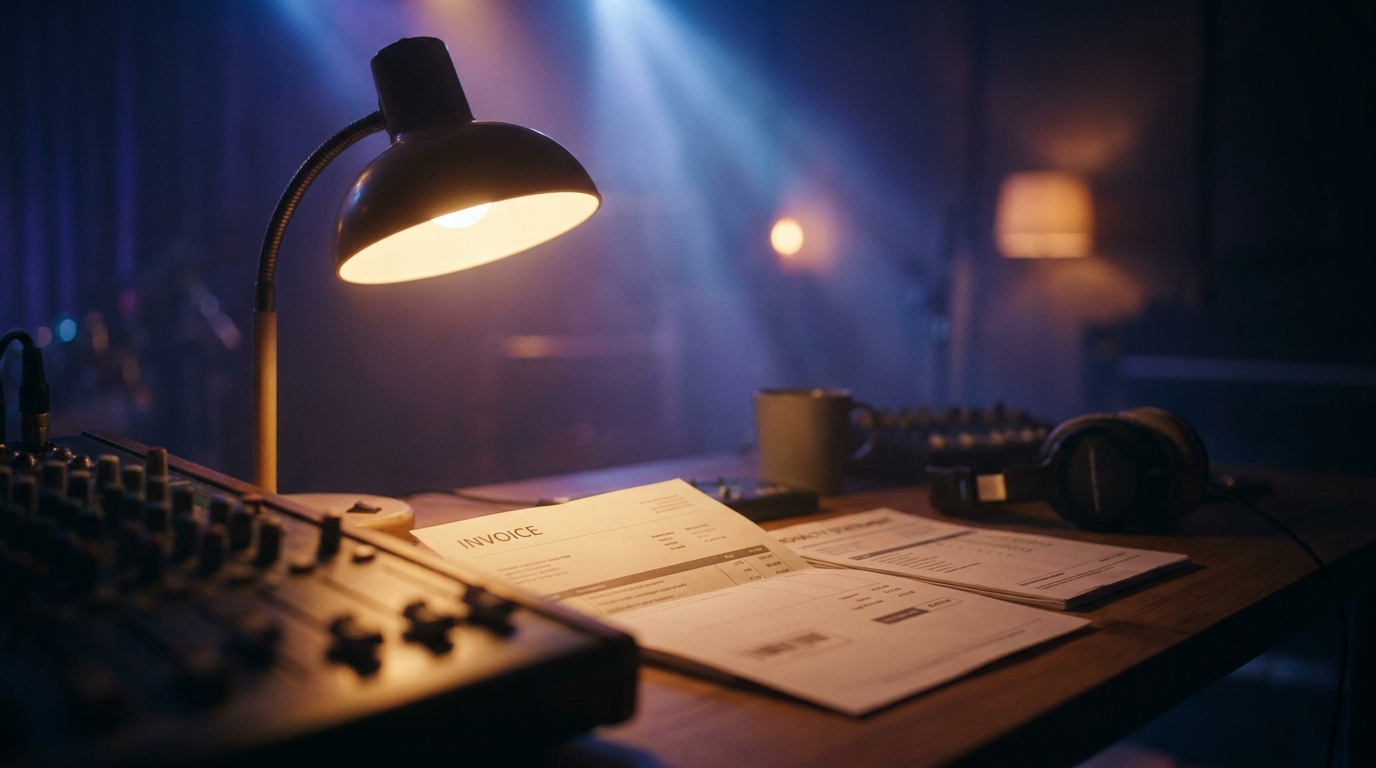
Ranges, not promises, because this swings hard by market and genre. At the entry end, a local producer-engineer often charges something close to a normal studio day rate. In the middle, expect a per-song fee plus a small share of royalties, typically a few points. At the top, a well-known name commands an advance most independent bands could not raise, plus points somewhere in the low single digits.
The points matter more than the fee over a long enough timeline. A producer with points is your business partner on that recording for as long as it earns anything. Read that contract slowly.
If you are still working out whether you need full production at all, start with the difference between a demo and an album session.
The same decision, minus the invoices
We built this into Road to Headliner because it is one of the more interesting choices a band makes. A song moves from writing through a demo, then polish, then a proper studio session, and every stage feeds the quality the finished track carries onto the charts. Push a weak song into an expensive session and you get a weak song that cost you more. The music pipeline section of the guide lays out what each stage is good for.
It is a compressed version of the real lesson: produce the song before you produce the recording.
So, should you hire one?
If your band keeps recording things that sound smaller than they feel live, yes. If nobody can agree on which take is best, absolutely yes. A producer is not a luxury purchase, they are the person who stops you spending three months polishing the wrong version of a good idea.
Want to test that instinct before you book a real studio? Start a band in Road to Headliner, write something, and run it through the pipeline yourself. It is free, it runs in your browser, and your first session costs nothing but a few in-game hours.