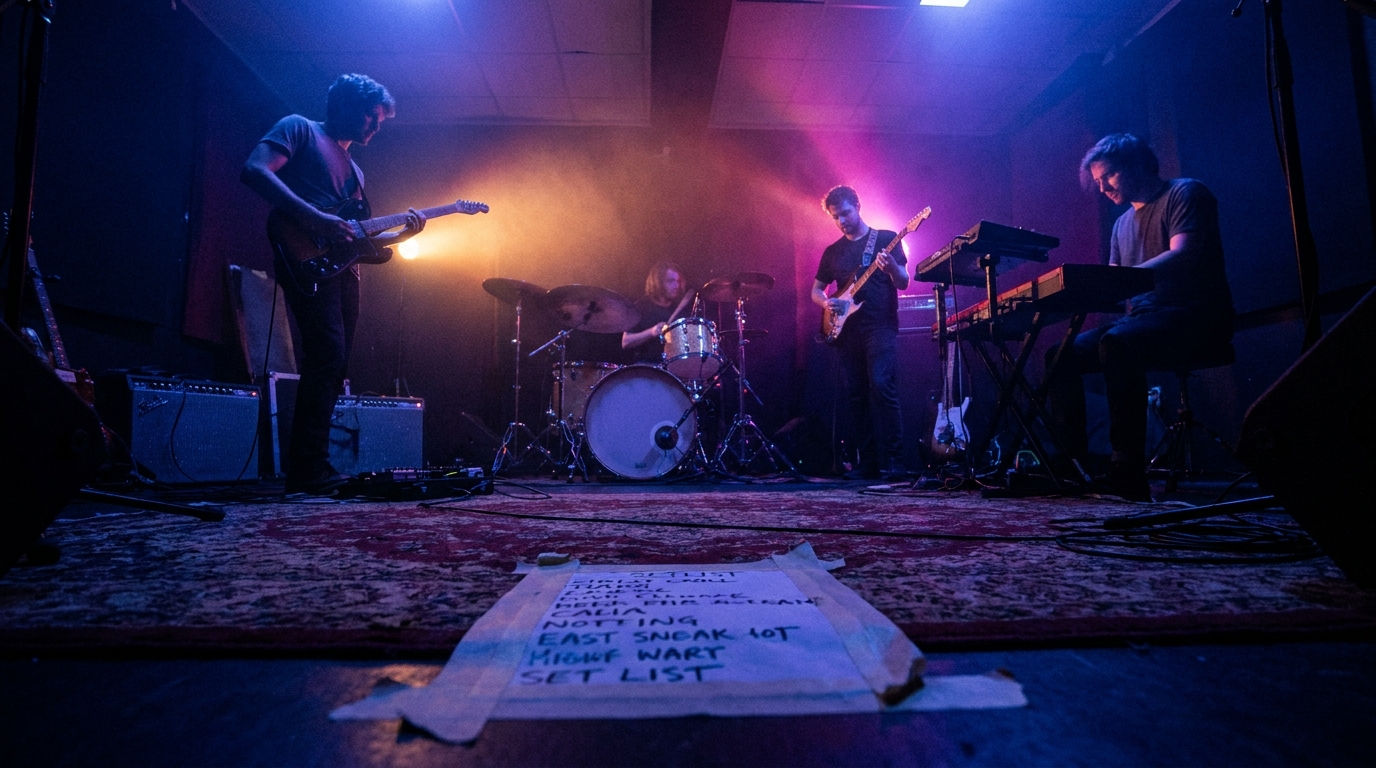
Rock lives or dies on stage. A rock band strategy built on rooms you can actually fill, a tour-first path, and where to spend when the budget is thin.
Nobody in that room has read your bio. They came for the headliner, or because a friend dragged them out, or because it was raining and the door was cheap. You get about three songs to change their evening.
That is the whole job, and it is why a rock band strategy looks less like a marketing plan and more like a gig calendar with teeth. Rock is the least forgiving genre to build on paper and the most forgiving to build on stage.
A rock band strategy starts with one room
Stop thinking in countries and start thinking in venues. A rock reputation is built one room at a time, and each room has a ladder inside it: the Tuesday support slot, the Friday support slot, the midweek headline, the sold-out weekend.
Climb that ladder in three or four venues within reach of home before you look at a map. Promoters talk to each other. A band that reliably brings sixty people is worth more to them than a band with better production and an unknown draw.
And draw is the number that follows you around. Everything else in this genre is downstream of how many people walk in when your name is on the poster.
Play the same city more than feels comfortable
New bands tend to scatter. One show here, one show two hundred miles away, nothing repeated. It feels like progress because the pins on the map multiply, but nobody in any of those towns remembers you.
The better pattern is annoying and boring and works: hit the same handful of cities every six to eight weeks. Not every month, because you will burn the crowd out, and not twice a year, because they will forget. Somewhere in between is where a local following turns into a room that sells out without a support band carrying it.
Where to spend when the budget is thin
Most young rock bands spend money in exactly the wrong order. Here is a more honest priority list.
- •Reliability first. A van that starts, a spare set of strings, a backup cable, a drummer with a spare snare head. Missing a show costs more than any gear upgrade gains.
- •Then the thing the crowd can hear. A better amp in the room beats a better guitar on a shelf. Nobody has ever left a show talking about your pickups.
- •Then one good live photo and one good live clip. Promoters book from proof, not promises.
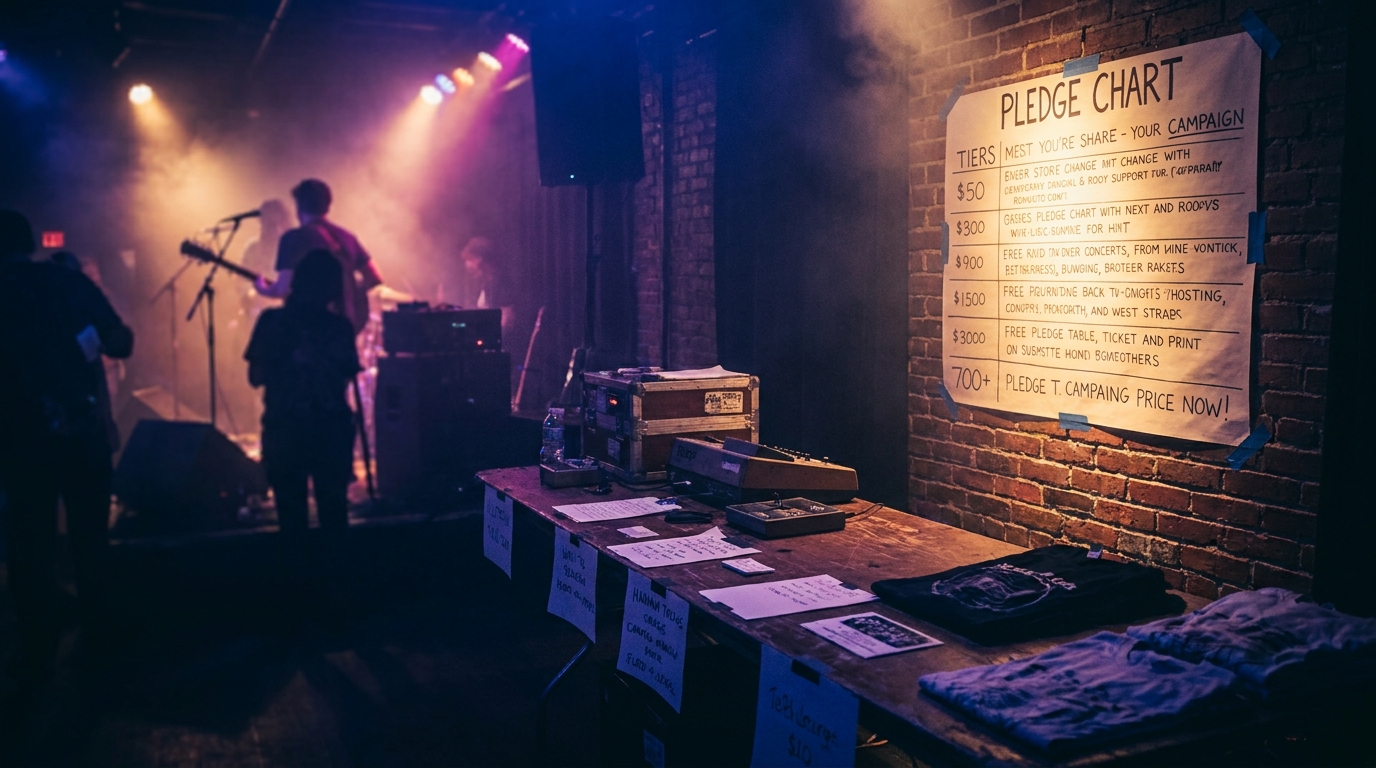
- •Then merch, but only shirts and one design. Merch margins pay for fuel. Fancy variants sit in a box under a bed for two years.
Studio time comes after all of that. Yes, really. A great recording with no live reputation gets you playlisted by nobody and booked by nobody. A rough recording plus a band that visibly destroys small rooms gets you both.
Tour before you think you are ready
The first proper run out is always a financial mistake and almost always the right call. You lose money, you learn what your set actually does to strangers, and you come home with four towns that have heard of you.
Route it tight. Two hundred miles between stops, not five hundred. Take the support slot with the band that shares your crowd rather than the headline slot in an empty room. If you want the boring logistics side of that, we wrote up the whole process in how to plan a band tour.
If your sound sits heavier, a lot of this still applies but the scene mechanics are different, and the metal band strategy guide covers those differences properly.
The set is the product
Rock bands obsess over songs and neglect sets. A set is an argument with a shape: open on your second-best song, never open on a slow one, put the newest untested song third from last, and finish on the one people hum in the car park.
Cut it short. Thirty-five confident minutes beats fifty-five with two songs you are unsure about. The band people book again is the band that leaves the room wanting a bit more.
Trying it without the diesel bills
This is more or less the loop we built Road to Headliner around. You start in a garage with no fans, book small rooms, watch your draw in each city move up or refuse to, and decide when a tour is worth the money. The booking and routing mechanics are laid out in the shows and touring guide, and the world is full of other managers making the same calls in the same venues.
Rock never really rewards the clever plan. It rewards the band that keeps turning up, plays a tighter set than it did last time, and treats every half-full room as an audition for the next one.
It is free, it runs in your browser, and you can have your first show booked in about five minutes. Go start a band.