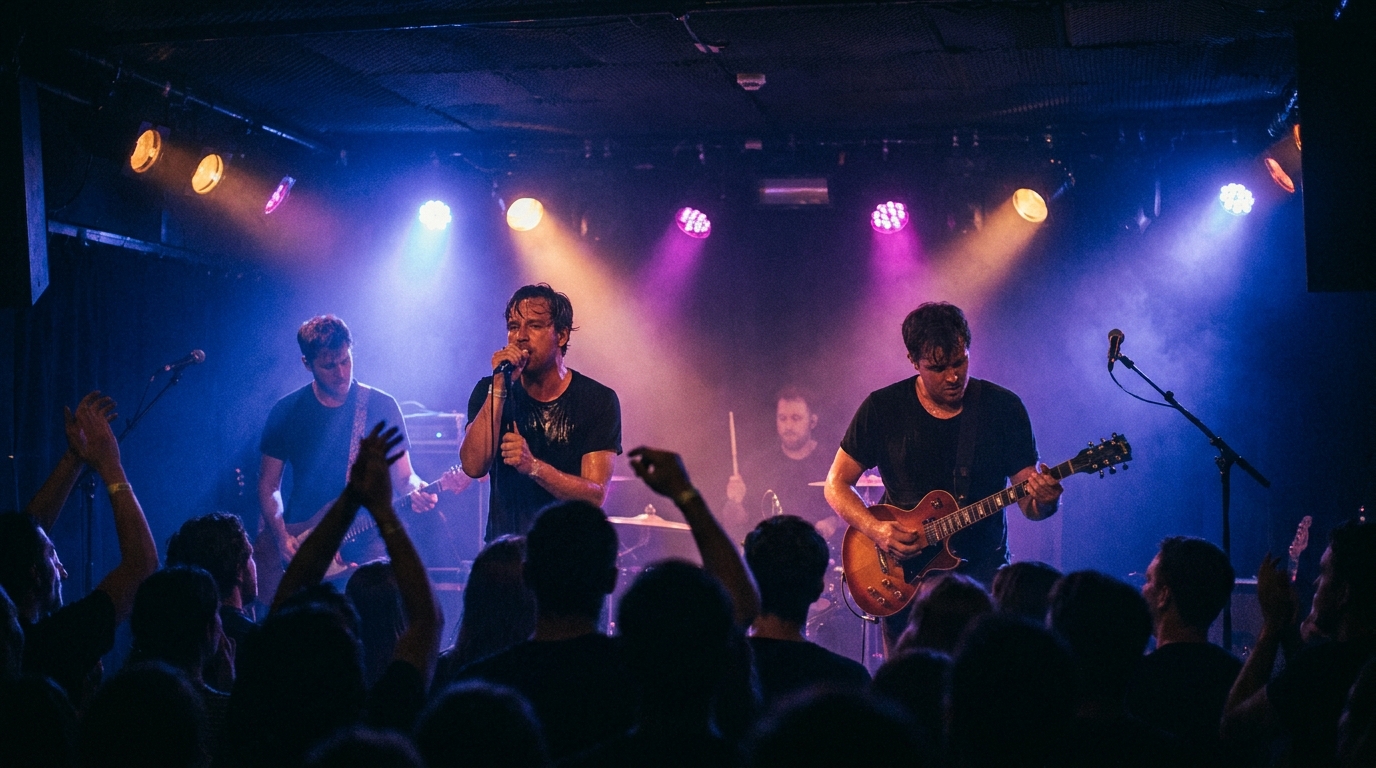
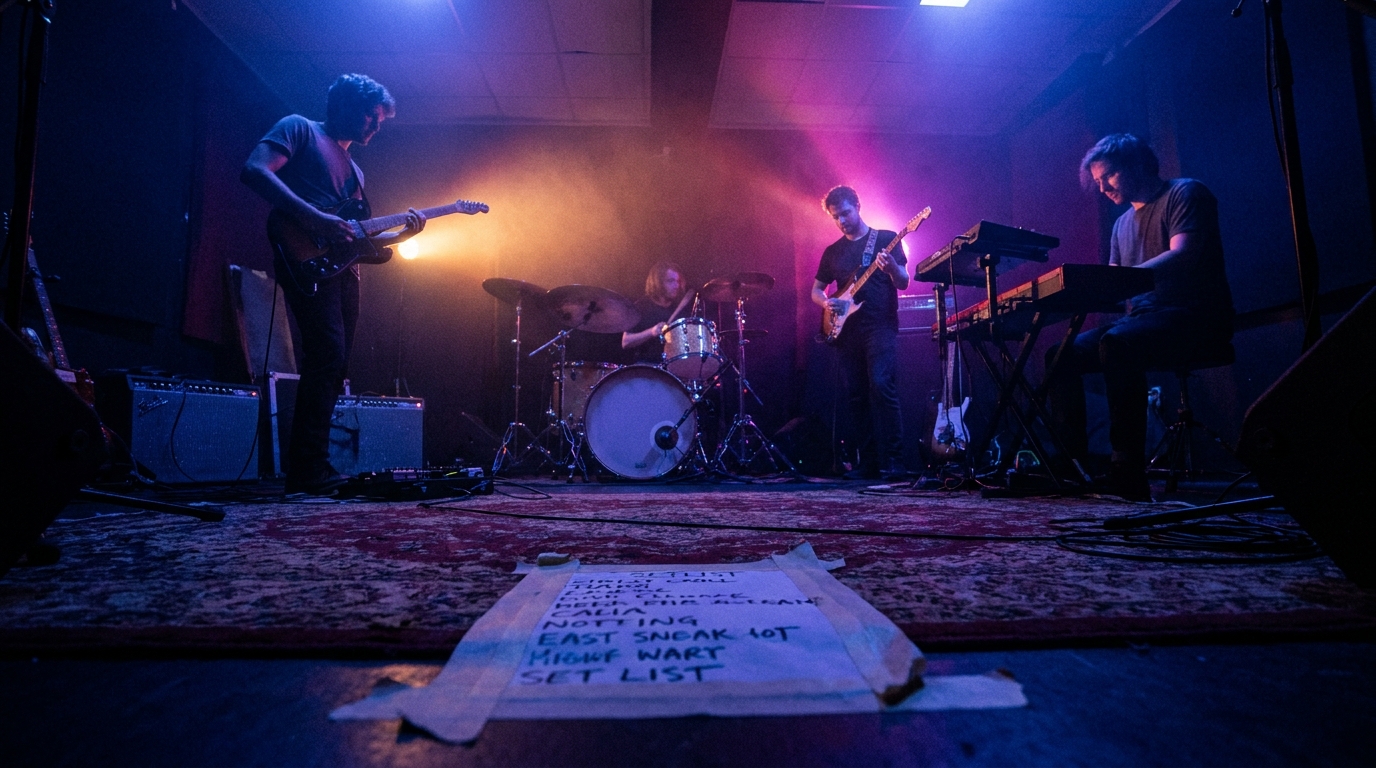
A punk band strategy runs on cheap shows, fast recording and a scene that turns up. Here is how DIY bands build real loyalty instead of chasing reach.
Twenty-two minutes. That is a perfectly respectable punk set, and it is also roughly how long a lot of punk records took to track.
That compression is the whole point. Every good punk band strategy starts from the same place: you have less money than everyone else, so you spend the two things you do have, which are speed and other people. Not polish. Not a marketing budget. Speed and other people.
Here is how that actually works when you are running a band rather than reading about one.
A punk band strategy starts with the economics
Most genres try to scale. Punk tries to survive at a small size without dying of it, which is a different problem and, honestly, a more solvable one.
A rock band renting a proper studio for two weeks needs a big payday to break even. A punk band that tracks live in two days needs a few decent weekends. That gap is enormous. It means you can afford to be wrong, release the thing anyway, and write four more songs while a slower band is still arguing about snare sounds.
So build the cheap version of everything:
- •Record live to catch the energy, overdub only what genuinely needs it.
- •Split gear, van costs and floor space with the two bands you play with most.
- •Print merch in small runs. Selling out of forty shirts beats sitting on two hundred.
- •Keep ticket prices low enough that turning up is not a decision anyone has to think about.
None of this is romantic poverty. It is just a lower break-even point, and a lower break-even point buys you time.
Scene first, audience second
A punk audience is not a list of followers. It is a room of people who know each other, and the fastest way in is not to advertise at them but to be useful to them.
Play the shows nobody else wants. Open at 7pm. Lend your cab. Put a touring band on your floor and they will return it in a city you have never played. Three bands who genuinely back each other will out-tour any one band with a promo budget, and it costs nothing but reliability.
The scene also does your filtering. A recommendation from a band people already trust travels further than any amount of reach, because in punk the endorsement is the promotion. That is why loyalty beats numbers here. Ten thousand passive listeners will not drive an hour on a Wednesday. Two hundred people who consider you theirs absolutely will.
Record fast, release often
Punk is one of the few genres where the demo can be the record. Roughness reads as honesty rather than as a mistake, which frees you from a trap most bands fall into: waiting until the material is perfect.
A sensible cadence is a short release every few months. Four songs, a split with a band you tour with, a live tape. Momentum matters more than production value, and a band that puts something out three times a year is always the band people have heard of recently.
The risk is the obvious one. Fast can become careless. The songs still have to be good, and short songs hide nothing. A weak chorus in a ninety second track is the entire ninety seconds.
Touring is the whole career
Punk built its infrastructure by driving to it. Regional loops beat big scattered tours: pick five or six cities within a day of each other, hit them repeatedly, and let the rooms grow from thirty to sixty to a hundred over a year.
The route matters more than the venues. If you are still working out how to get the first dates on the calendar at all, our walkthrough on booking your first shows covers the unglamorous part, and the touring and live shows section of the guide explains how repeat visits compound into a real local following.
If you want the wider-lens version of live reputation building, the rock band strategy guide shares a lot of the same logic with more budget and less basement.
How this plays out in the game
We built Road to Headliner so a scrappy approach is genuinely viable, not a handicap. Cheap small venues in your home city build local fanbase faster per dollar than a badly attended big room. Recording short, quick releases keeps you on the charts more weeks of the season than one expensive album does. Playing the same region repeatedly compounds.
And, as in real life, it is slower to look impressive and quicker to become unavoidable in one city.
Punk rewards the band that keeps showing up. Not the loudest one, not the best funded, the one still playing in year three when everyone else got bored.
Fancy running that band yourself? Start one free in Road to Headliner, book a basement show in about five minutes, and see how far cheap and relentless gets you.