A booker gives your press kit about twenty seconds. Here is how to make an EPK that survives that: the eight blocks, the one-link rule, what to cut.
A booker at a 300-capacity club gets a couple of hundred emails a week. She opens the ones with a sensible subject line, looks for three things, and closes the rest. That is the real audience for your press kit, and she is not in a generous mood.
So the useful way to think about how to make an EPK is this. You are not building a shrine to your band. You are building a page that lets a busy stranger decide about you in under a minute.
What an EPK actually is
EPK stands for electronic press kit. In practice it is one web page holding everything a promoter, journalist, festival booker or curator needs: who you are, what you sound like, proof that people turn up, and how to reach you.
It is a decision tool, not a scrapbook. Every element on it either helps someone say yes or gets in the way of it.
The one-link rule
An EPK is one link. Not a Dropbox folder with fourteen files in it. Not five attachments that trip a spam filter. Not a zip called FINAL_v3_new.
One URL, sitting in the second line of your email, that opens fast on a phone. Most of the people who matter will look at it on a phone, standing in a venue, at half eleven at night. If you fix one thing today, fix that.
How to make an EPK: the running order
Put these in this order, because it is the order people look for them in.
- •A band photo that looks like your music. One strong horizontal shot at the top, with high-resolution versions further down for press to grab.
- •One sentence. Who you are, where you are from, what you sound like. 'Four-piece garage soul band from Leeds' beats three paragraphs of adjectives.
- •The music, playing immediately. An embedded player with your two or three best tracks. Not the whole discography. Lead with the song that wins people over fastest, not the one you are proudest of.
- •A short bio. Two paragraphs, maximum. If the blank page is beating you, we wrote a whole piece on writing a band bio that is not embarrassing.
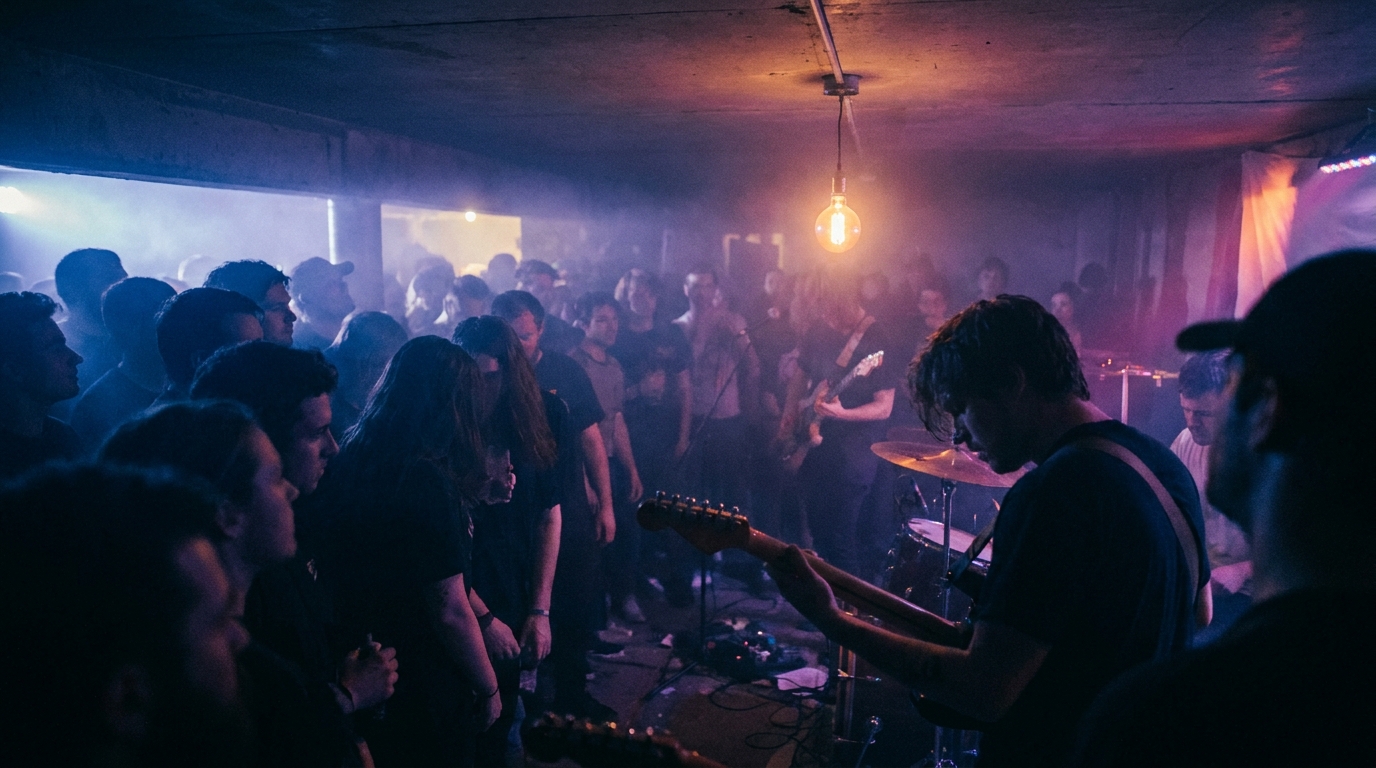
- •Live proof. One video of you actually on a stage, plus recent shows and honest draw numbers. A promoter cares far more that you pulled 120 people in Sheffield than that you have a nice-looking listener count.
- •Press quotes, if you have them. Three short ones with sources. If you have none, delete the section. An empty press box is worse than no press box.
- •The practical stuff. Line-up size, stage plan, a link to the tech rider, home city, how far you can travel, socials and streaming links.
- •Contact. A name, an email, and who that person is. 'Booking: Sam, [email protected]'. Never a contact form.
Eight blocks. One screen of scrolling, maybe two. That is a complete press kit.
What to leave out
- •Autoplaying video with sound. Instant close, every time.
- •The full back catalogue. Curate it, or the reader will curate by pressing back.
- •Long paragraphs about your recording process. Nobody outside the band cares about that yet.
- •'Influences include' lists of twelve artists. Two names is a comparison, twelve is a shrug.
- •The photo of the band leaping in a field. You know the one.
One more thing: date it. A press kit still leading with a tour from two years ago quietly tells people you have stopped.
Keep it alive
An EPK is not a document you finish, it is a page you maintain. New single, new headline show, a decent review, a better photo. Ten minutes every couple of months keeps it honest, and honest is the whole point.
It also has to sit inside something bigger. The kit gets you the meeting, but the mailing list, the local scene and the reason anyone opened your email in the first place are the actual work, and we cover that in the guide to marketing your band on almost no budget.
Practising the pitch without the stakes
Presenting your band to people who are allowed to say no is a skill, and real life hands you about four chances a year to practise it.
That is one of the things we wanted from Road to Headliner. You run a band in a shared world, and your reputation, press coverage and pull in each city are things you build up and then spend when you approach promoters, venues and labels. The marketing and PR section of the guide walks through how buzz and press actually shift your standing, which turns out to be a decent mental model for the real version.
Your press kit is a door, not a monument. Build the eight blocks tonight, send the link to one promoter this week, then improve it from whatever comes back.
And if you want somewhere to practise the whole game of getting a band noticed, start a band for free and see how far you can take it. It runs in your browser, it costs nothing, and your first gig can be booked in about five minutes.