The Art of the Setlist: How to Pace a Show That Wins the Crowd
Learn how to make a setlist that grabs a room and never lets go. Opener theory, the energy curve, encores, and the order that turns a gig into a moment.
Two bands play the same ten songs to the same crowd. One room is electric by song three. The other is checking phones. The only difference is the order.
That is the whole secret nobody mentions when they teach you how to make a setlist. It is not about which songs you have. It is about the shape of the journey you take people on, from the first downbeat to the last sweaty singalong. Get the shape right and an average band feels great. Get it wrong and a great band feels flat.
So let's talk about pacing a show like you actually want to win the room.
How to make a setlist that opens strong
Your first song has one job: convince the crowd they made the right choice walking in. Do not open with the slow burner you are proud of. Open with energy, something tight and familiar enough to land in the first thirty seconds.
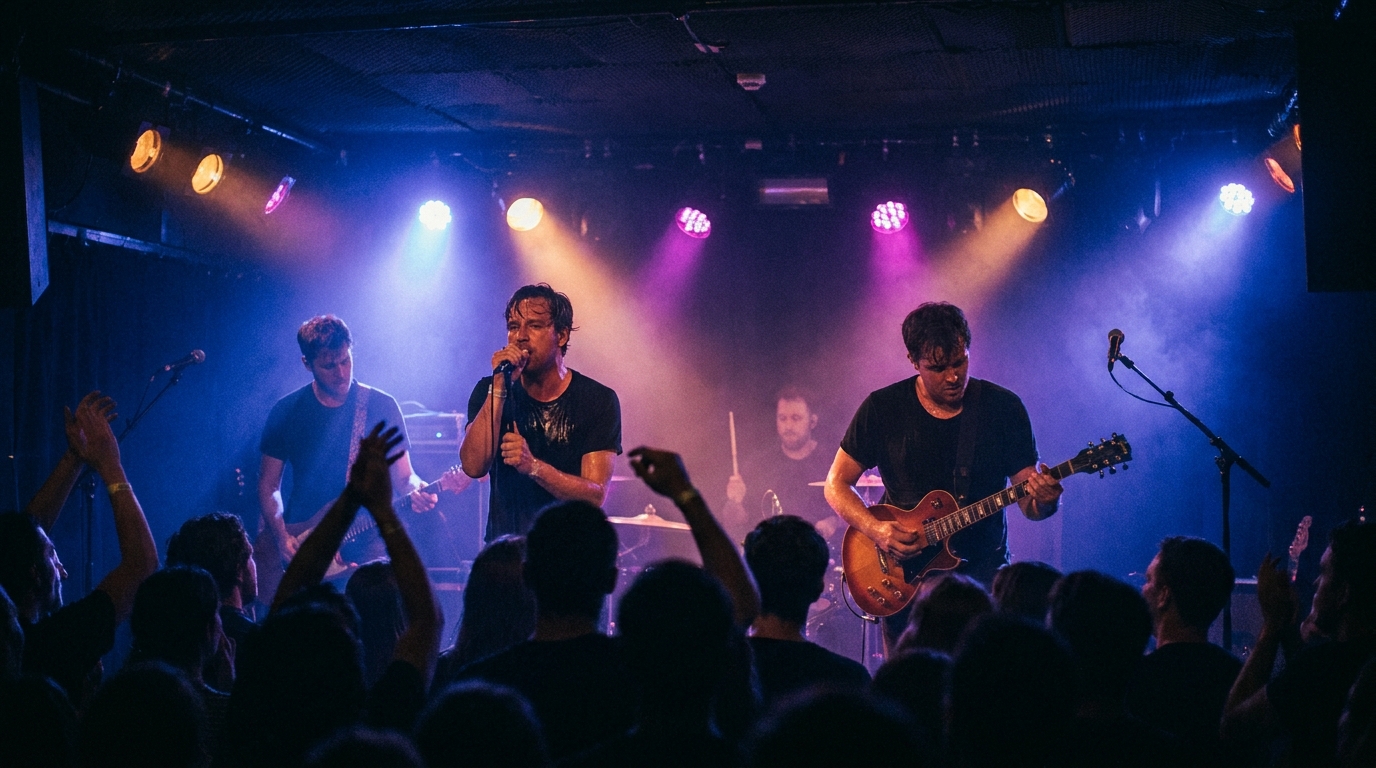
Think of the opener as a handshake. Confident, warm, over quickly. You want hands in the air before anyone has finished their first drink.
Then comes the trap. New bands blow their two best songs in the first fifteen minutes and spend the rest of the night coasting downhill. Resist that. Open strong, yes, but keep a couple of grenades in your back pocket.
Build the energy curve, do not flatline it
A good set is not a flat wall of loud. It breathes. The classic shape looks like a heartbeat: a punchy opening cluster, a dip into something slower and more intimate in the middle, then a steady climb back up to a roof-lifting finish.
That middle dip matters more than people think. A ballad or a stripped-back moment gives the crowd a breather, makes the loud parts feel louder by contrast, and gives you a second to actually talk to the room. Concert pacing is just managing attention. Spend it, then earn it back.
A rough setlist order that works for a ten-song club gig:
- •Songs 1 to 2: high energy, instant hooks
- •Songs 3 to 4: your strongest mid-tempo material
- •Songs 5 to 6: the dip, slower and more personal
- •Songs 7 to 8: rebuild, crowd participation
- •Songs 9 to 10: your two biggest, back to back
That is a template, not a law. Read your own catalogue and find the heartbeat in it.
Read the room and adjust
The best setlist is a plan you are willing to abandon. If the crowd is older and seated, lean into the songs that reward listening. If it is a sweaty Friday and people came to move, cut the second ballad and drop another fast one in.
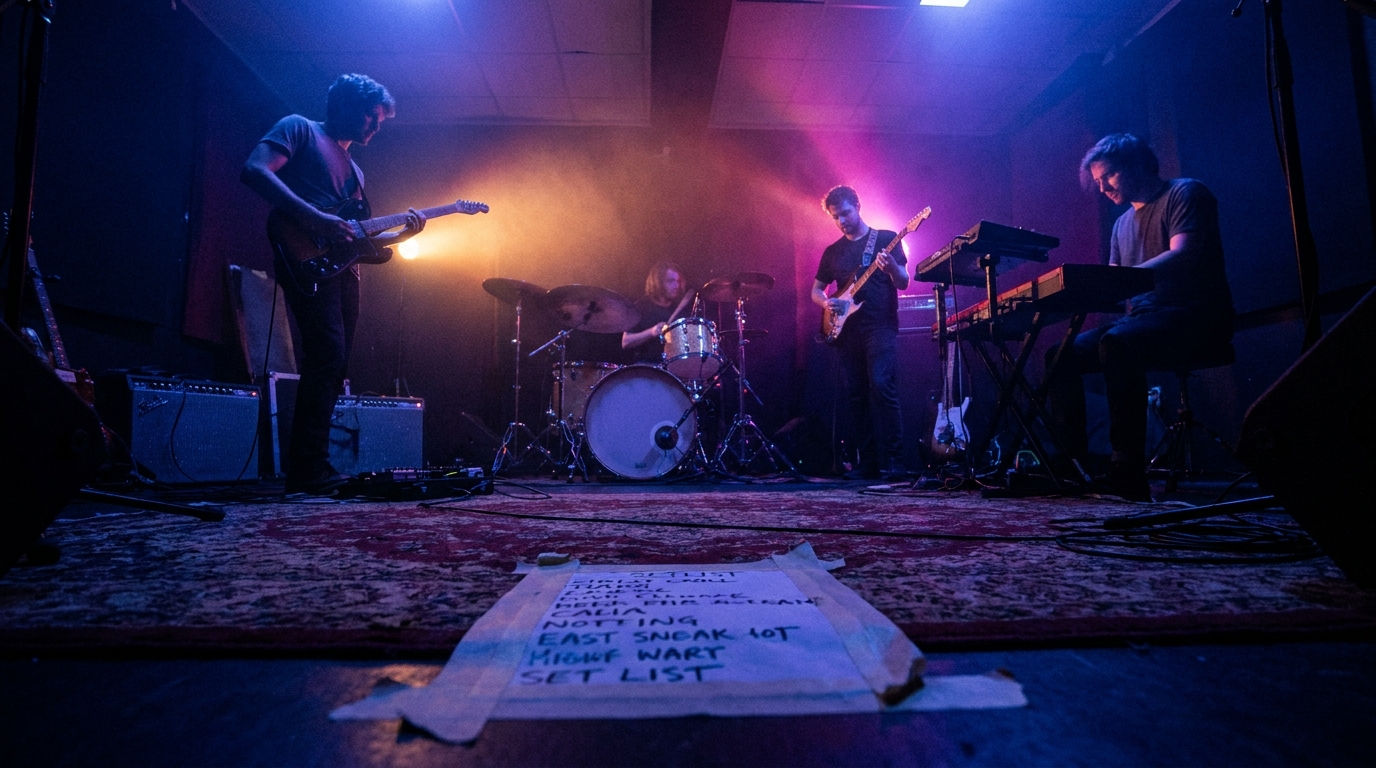
Little moves count. Watch where energy sags and learn from it for next time. A setlist taped to the floor is a starting point, not a contract. The bands people remember are the ones who felt present, not the ones who hit every mark on a list.
Land the closer and the encore
Your last real song should be the one people will hum on the walk home. The biggest hook, the loudest chorus, the moment the whole room sings the line back at you. Send them out on a high, not a question mark.
The encore is a reward, not a guarantee. Hold back one genuine crowd-pleaser, leave the stage, and let them ask for it. When you come back, it feels earned for everyone. That little bit of theatre is part of show performance, and it costs nothing but restraint.
Where this turns into a game
This is exactly the kind of thinking we wanted to make playable in Road to Headliner. When you book a gig, the way you pace and pick your material feeds directly into how a show is scored, so a smart setlist genuinely outperforms a lazy one. We break down the live system in the shows and touring guide, and if you are still finding your feet on stage, the walkthrough on booking your first shows is the place to start.
The bonus is that a great set does double duty. Crowds that leave buzzing come back and bring friends, which is half of how you grow a fanbase in the first place.
Setlists are one of those skills that look simple and take a career to master. The good news is you can practice the thinking tonight, for free, without loading a single amp into a van. Spin up a band in Road to Headliner, book a show, and find out what your crowd really wants to hear. Your first gig is about five minutes away.