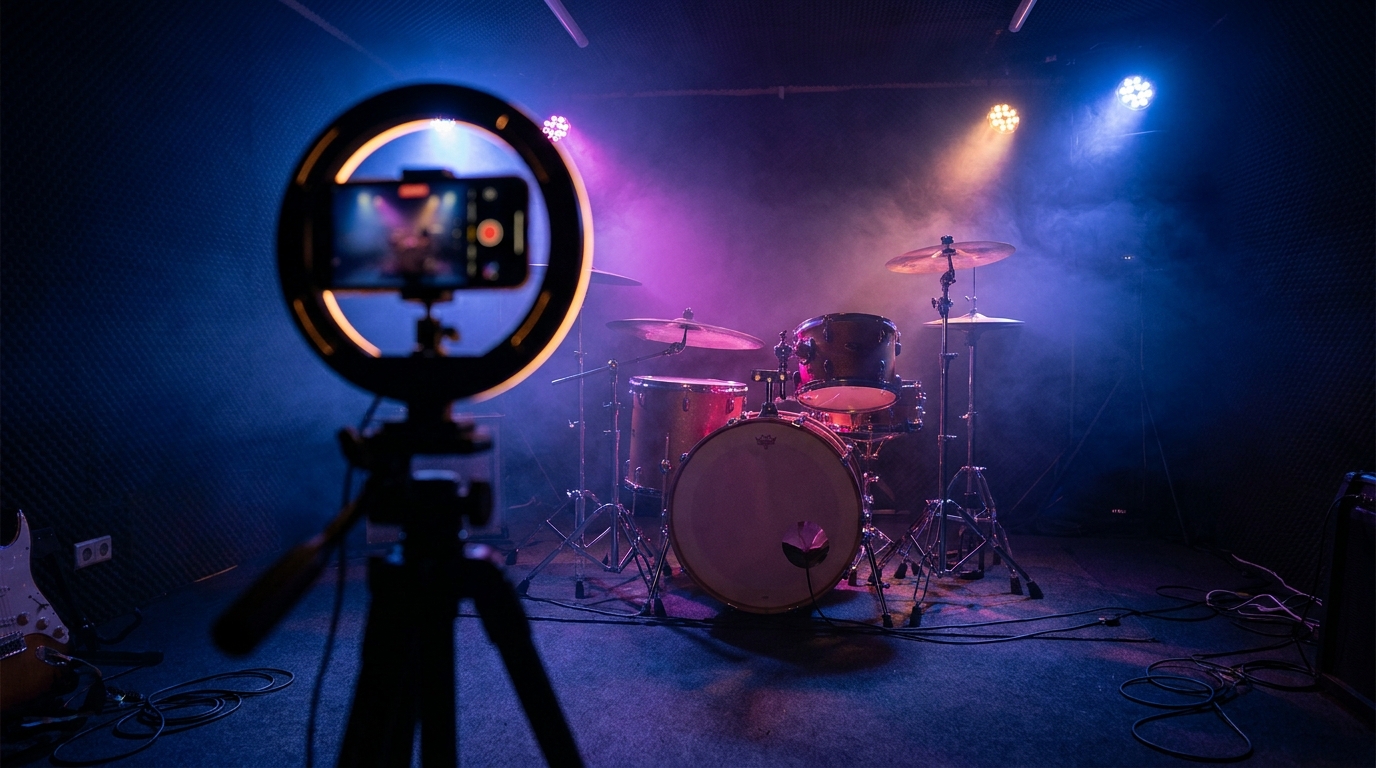
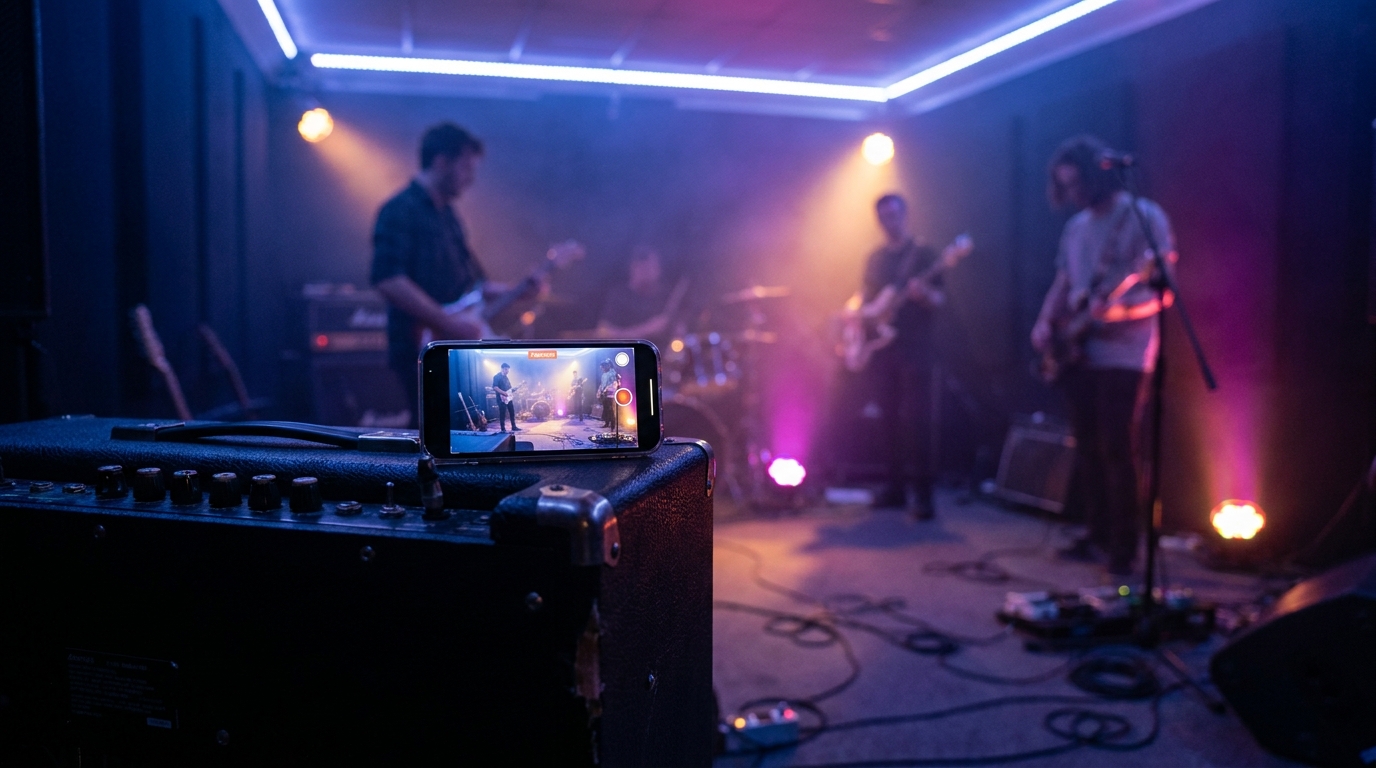
Gear is the smallest part. Here is how to record music at home so it sounds like a record: the room, the short gear list, and when to pay someone.
The microphone is not your problem. Your room is.
Every home recording thread starts the same way: someone asks which interface to buy, and forty people answer with gear links. Meanwhile the real reason most bedroom tracks sound like bedroom tracks is a bare plaster wall two feet behind the singer and a laptop fan humming under every quiet passage.
So here is how to record music at home without the result announcing itself as a demo. Short version: buy less, treat the room more, and track slower than feels necessary.
How to record music at home: the gear that actually matters
You need fewer things than the internet would like to sell you.
- •An interface with two inputs. Anything from a known brand in the typical 100 to 250 price range will do. Converters and preamps stopped being the weak link at that tier a long time ago.
- •One large diaphragm condenser and one dynamic mic. The condenser for vocals and acoustic sources, the dynamic for loud things and untreated rooms. Two mics cover roughly everything a home recording setup ever asks for.
- •Closed back headphones for tracking. Open backs bleed into the mic. That is not a taste question, it is physics.
- •One pair of speakers you learn. Not the best speakers. The ones you play a hundred hours of familiar music through, so you know what a finished mix sounds like on them.
Notice what is missing from that list. A second interface, a rack compressor, the plugin bundle that was 90 percent off last week. All of that is optimisation. None of it fixes a take.
The room beats the microphone every time
A cheap mic in a treated corner beats an expensive one in a bare bedroom. Reflections arriving a few milliseconds after the direct sound are what make a recording sound small and boxy, and no plugin removes them cleanly once they are baked in.
You do not need foam shaped like egg cartons. You need soft mass in the right places.
Hang a duvet on the wall behind the singer, not in front of them. Point the mic at something absorbent, and an open wardrobe full of clothes works genuinely well. Get out of the exact centre of the room, and break up parallel walls with a bookshelf, a sofa, anything irregular.
Then record at three in the morning if you have to. The quietest hour in your house is a free upgrade nobody sells.
Tracking discipline is the actual skill
This is where bedroom studio recordings are won or lost, and it costs nothing at all.
Tune before every take, not once per session. Commit to a tempo and play to it, even if you hate clicks, because you can always drift on purpose later. Get the headphone mix right before you press record, since nobody sings well hearing themselves buried under a guitar.
Do full passes instead of punching in every two bars. Three complete takes usually comp into something better than thirty fragments, and they keep the performance energy that heavy editing quietly drains.
And label your files. Vocal_lead_take3 is boring. Audio 07 is a future argument with yourself.
The point where you should stop and pay someone
There is a moment in most home projects where you have taken it as far as your ears and your room allow, and every extra hour makes it slightly worse. Learn to spot that moment.
It is usually the mix. Recording at home is a solved problem now. Mixing well is a craft that takes years, and a fresh professional set of ears on your stems will do more for the song than anything you could buy. If you are not sure what you would even be paying for, we break the roles apart in mixing versus mastering.
Pay someone when the track really matters, when it will represent you for years, or when you have been nudging the same reverb slider for two days. Keep doing it yourself when the point is speed and volume of output.
The same trade off, in the game
We built this tension into Road to Headliner on purpose. Songs move through writing, demo, polish and full studio sessions, and every stage costs time and money you might rather spend on gigs. Rushing a great song into a cheap recording wastes the song. Over polishing a mediocre one wastes more. The music pipeline part of the guide shows where recording quality actually comes from, and we go deeper on the choice in demo versus album recording.
Home recording rewards boring virtues. A quiet room, a tuned instrument, patience with takes. Gear is the fun part and the smallest part.
If you want to make those calls for a whole band without remortgaging anything, start a band free in Road to Headliner. It runs in your browser, costs nothing, and you can have your first song written in about five minutes.